

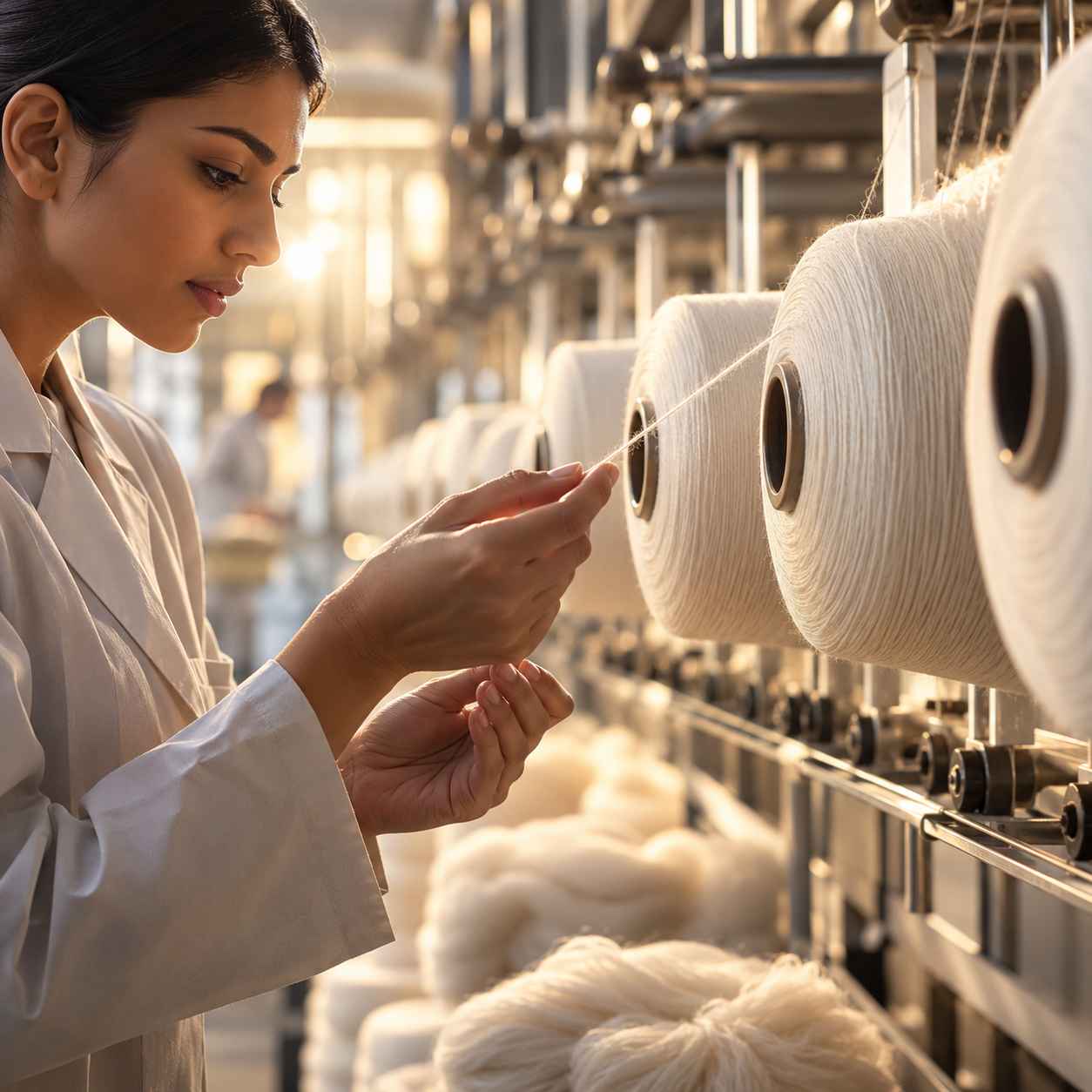
Modern manufacturing is increasingly focused on materials that can deliver consistency, durability, and performance without adding unnecessary complexity to production. From apparel and home textiles to technical fabrics and industrial products, synthetic materials have become an important part of this transition.
Among the many materials used today, polyester yarn continues to play an important role because of its combination of strength, dimensional stability, durability, and versatility. Polyester-based materials are used across apparel, furnishings, technical textiles, ropes, nets, belts, and several other industrial applications.
At the same time, specialized synthetic fibers and monofilaments are opening up opportunities for applications where precise dimensions, abrasion resistance, and structural stability are important.
Understanding the Growing Role of Synthetic Fibers
Synthetic fibers are manufactured from polymers and can be engineered to provide specific characteristics depending on the intended application. Unlike natural fibers, their properties can be adjusted through polymer selection, production techniques, filament structure, and finishing processes.
This flexibility makes synthetic fibers useful in industries that require predictable performance.
Manufacturers may select different materials based on factors such as:
- Tensile strength
- Abrasion resistance
- Flexibility
- Dimensional stability
- Chemical resistance
- Moisture behavior
- Temperature performance
- Outdoor durability
The correct material, therefore, depends not simply on price, but on how the final product will be used.
Why Polyester Yarn Remains Widely Used
Polyester yarn has established itself as a versatile material for both consumer and industrial applications. Its strength, resistance to stretching, easy-care characteristics, and abrasion resistance make it suitable for a wide variety of products.
In textiles, polyester yarn can be found in clothing, sportswear, home furnishings, upholstery, curtains, carpets, and other fabric products. Industrial applications can include belts, ropes, nets, technical fabrics, and reinforcement materials.
One of its major advantages is versatility. Different yarn constructions can be developed according to the required performance, appearance, texture, and end use.
For businesses purchasing textile materials, this makes understanding yarn specifications particularly important. A material selected for apparel may have very different requirements from one intended for a technical textile or industrial product.
Where Monofilament Materials Make a Difference
Monofilament is different from conventional multifilament yarn because it consists of a single continuous filament. This structure can provide a smooth surface, consistent diameter, and dimensional stability, making monofilament suitable for several specialized applications.
Depending on the polymer and manufacturing specifications, monofilament can be used in:
- Filtration fabrics
- Industrial mesh
- Agricultural nets
- Sports nets
- Screen-printing mesh
- Technical textiles
- Industrial brushes
- Ropes and specialized products
For applications where consistent openings, structural stability, or resistance to repeated use are important, the characteristics of monofilament can be particularly valuable.
Choosing Materials Based on Application Requirements
One of the most important decisions for manufacturers is selecting a material according to the actual requirements of the finished product.
For example, a textile producer may prioritize softness, appearance, dyeability, and flexibility. A filtration manufacturer may instead focus on dimensional stability, chemical resistance, surface characteristics, and consistent filament diameter.
Similarly, outdoor applications may require materials that can withstand environmental exposure, while industrial applications may place greater emphasis on abrasion and mechanical performance.
This is why purchasing decisions should consider more than the basic material name.
Important specifications may include:
- Material composition—Different polymers provide different performance characteristics.
- Yarn structure—Filament construction influences flexibility, strength, and surface behavior.
- Diameter or denier—Precise dimensions can be critical for technical applications.
- Tensile performance—Strength requirements vary significantly between end products.
- Environmental resistance—Outdoor and industrial products may require additional resistance properties.
- Production consistency—Uniformity can influence the quality of the final product.
The Importance of Specialized Industry Knowledge
As applications become more specialized, manufacturers increasingly need suppliers and technical partners who understand how different synthetic materials perform in real production environments.
Working with synthetic fiber & monofilament experts can help businesses evaluate material requirements more systematically. Instead of selecting a yarn solely on price or availability, manufacturers can consider the relationship between material properties, production conditions, and final-product performance.
This approach can be especially useful when developing technical textiles or products that require customized yarn specifications.
Supporting Innovation Across Industries
The development of synthetic fibers is closely connected with innovation in manufacturing. New product requirements often lead manufacturers to explore different polymer combinations, filament structures, surface treatments, and performance characteristics.
For example, technical textiles increasingly require materials that can combine mechanical strength with flexibility or dimensional stability. Agriculture, filtration, sports, automotive, and industrial manufacturing all have their own material requirements.
This creates opportunities for specialized yarn and filament producers to develop solutions around specific applications rather than relying on one material for every purpose.
Looking Ahead
Synthetic fibers and specialty yarns will continue to support innovation across textile and industrial manufacturing. Materials such as polyester yarn are already used across a broad range of applications, while specialized monofilaments provide additional possibilities for technical products requiring precise and consistent performance.
For manufacturers, the key is not simply choosing a popular material. It is understanding the relationship between material characteristics and the demands of the finished product.
As industries continue to develop more specialized products, collaboration with experienced synthetic fiber & monofilament experts can help businesses evaluate available materials and identify specifications suited to their production requirements.
The future of textile and technical manufacturing will depend not only on new materials but also on using existing materials more intelligently. Better material selection, application-specific engineering, and consistent manufacturing practices can help businesses create products that perform reliably in their intended environments.